从目标性质出发,探索材料的全空间逆向设计Exploring full-space materials inverse design from target properties
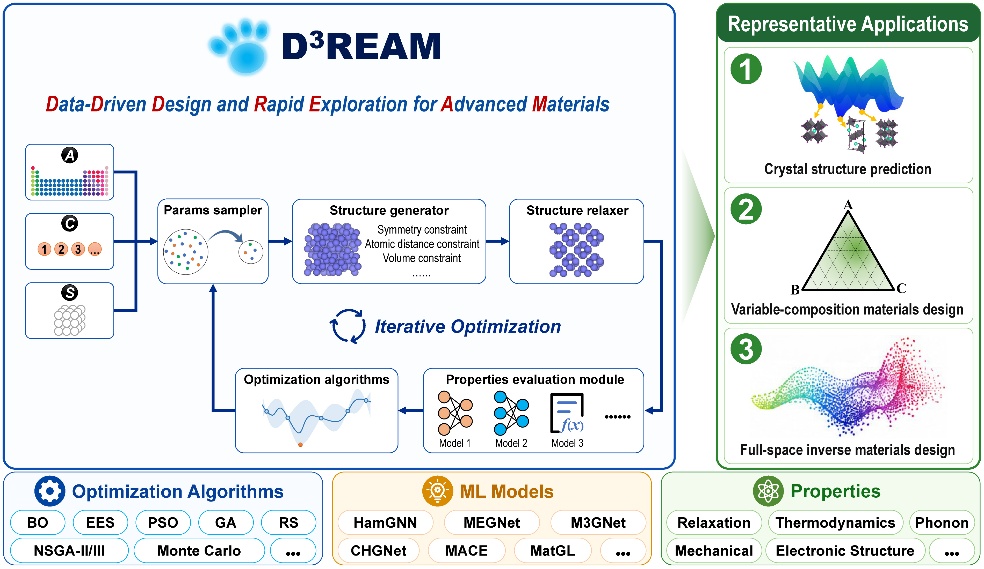
材料的性质由元素类型(A)、化学配比(C)和结构构型(S)共同决定,三者的组合构成庞大的设计空间,给具有目标性质的新材料发现带来挑战。我们团队聚焦材料逆向设计,从目标性质出发寻找合适的化学组成与原子排列,不局限于已知化合物或预设结构原型。Material properties are jointly determined by elemental identity (A), chemical stoichiometry (C), and atomic structure (S). Their combination forms a vast design space that makes the discovery of materials with target properties challenging. We focus on inverse design, starting from target properties to identify suitable compositions and atomic arrangements without being limited to known compounds or predefined structural prototypes.
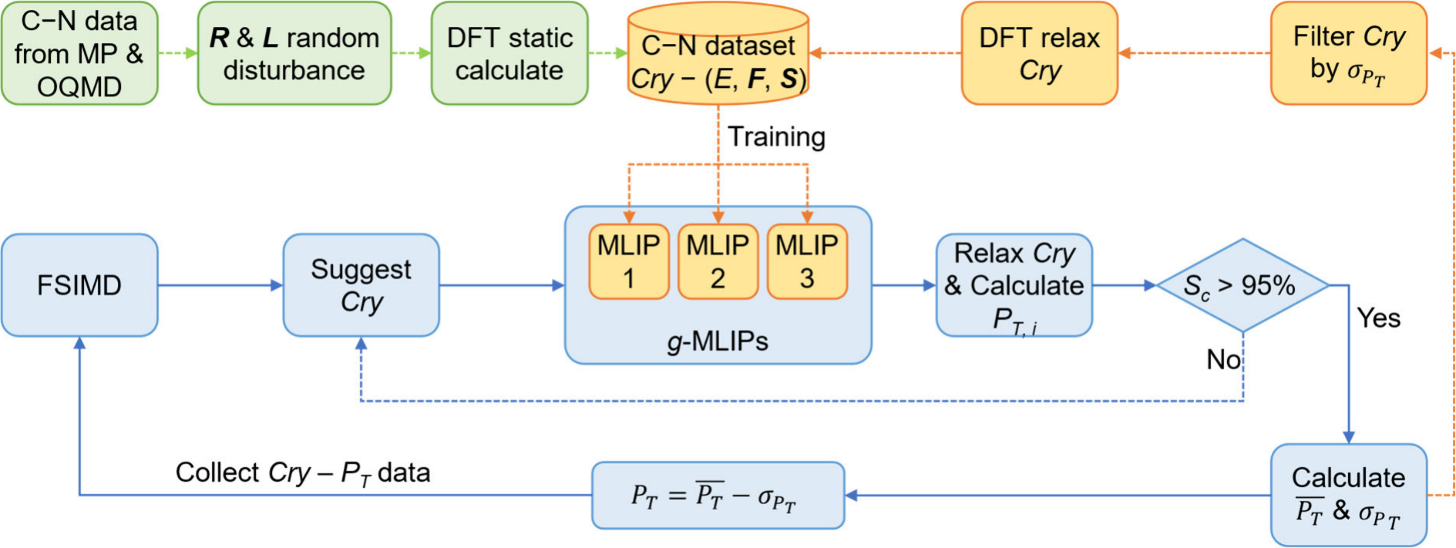
我们发展了联合探索(A、C、S)全空间的逆向设计方法:利用全局优化算法引导目标性质导向的搜索,通过机器学习原子间势与性质预测模型快速评估候选材料,并通过主动学习协同推进材料探索与模型迭代优化。We develop inverse-design methods that jointly explore the full (A, C, S) space. Global optimization guides property-driven searches, machine-learning interatomic potentials and property-prediction models rapidly evaluate candidates, and active learning couples materials exploration with iterative model refinement.
相关方法已应用于晶体结构预测、新型超硬 B–C–N 化合物发现、全空间功能材料设计,以及通用机器学习势的数据采样与模型训练。通过结合先进的机器学习与优化算法,我们致力于寻找兼顾多性质要求的新材料,发展可靠、可迁移的逆向设计方法。These methods have been applied to crystal structure prediction, the discovery of novel superhard B–C–N compounds, full-space functional-materials design, and data sampling and model training for universal machine-learning potentials. By combining advanced machine learning with optimization algorithms, we seek materials that satisfy multiple property requirements and reliable, transferable inverse-design methods.